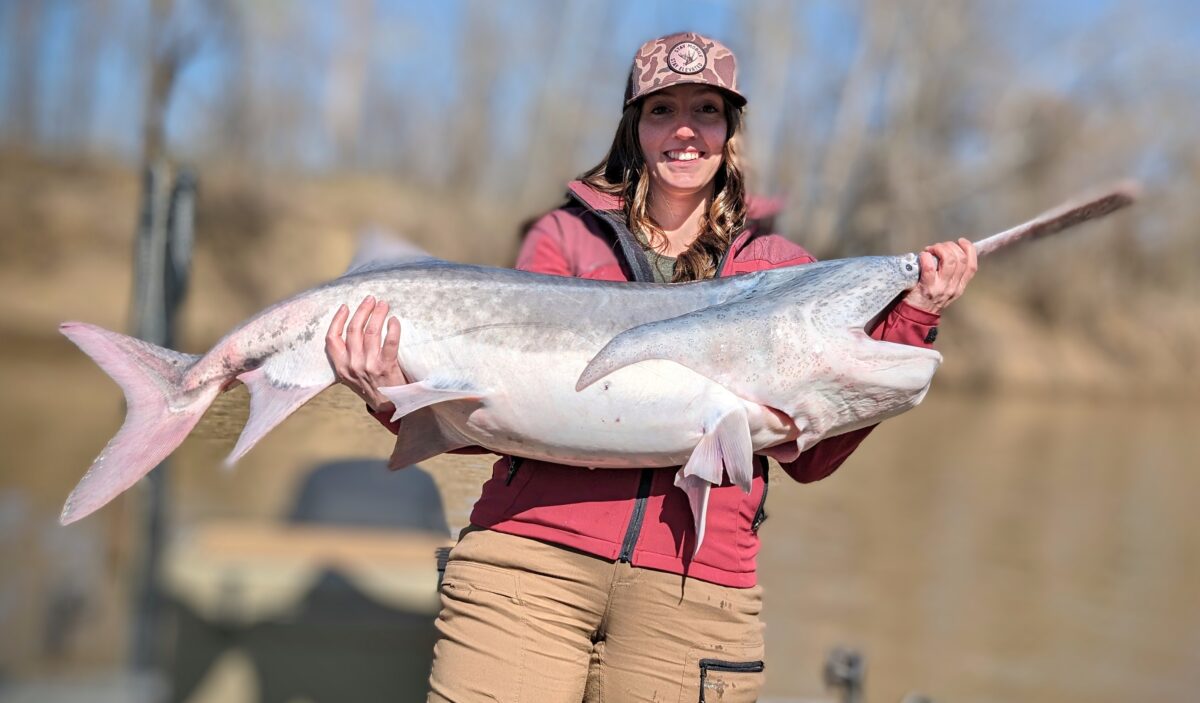
Oklahoma is known as a prime destination for paddlefish, which are also known as spoonbill, along with a variety of other nicknames. The Arkansas, Grand, and Verdigris Rivers are rich in nutrients that allow these prehistoric giants to thrive and also have optimal spawning areas.
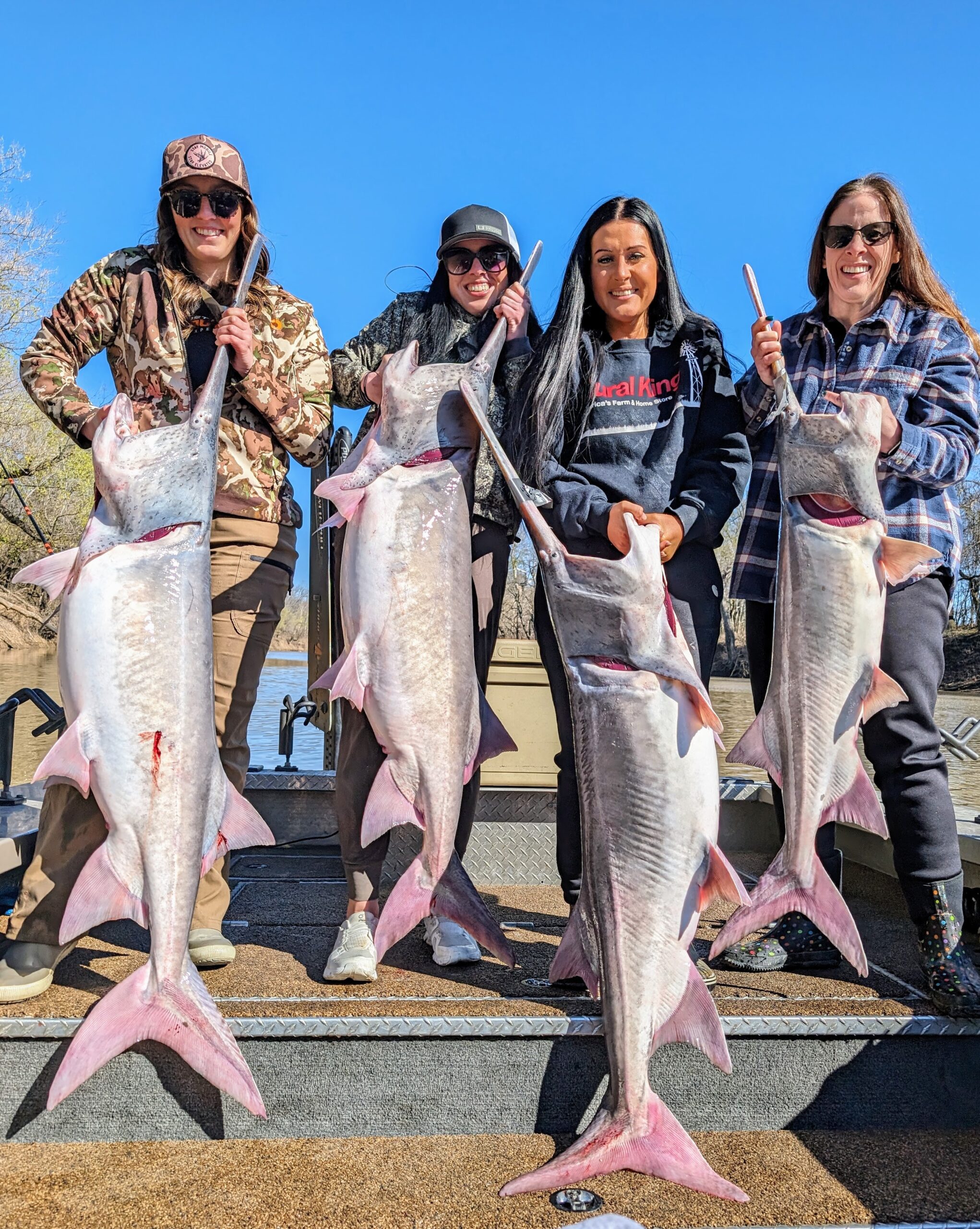
Oklahoma Paddlefish Overview
The paddlefish is one of the most unique freshwater fish in North America because
- Oklahoma Paddlefish can live 20–30+ years
- Commonly weigh 40–80 pounds
- Occasionally exceed 100 pounds
- Feed by filtering plankton usually suspended in the water column
Oklahoma is considered one of the top areas in the country to catch them because of their healthy population and the state’s specific regulations.
Bodies of Water We Target:
- Kaw Lake
- Oologah Lake
- Keystone Lake
- Fort Gibson Lake
- Hudson Lake
- Grand Lake of the Cherokees
- Neosho River
- Keystone Lake
- Arkansas River
- Verdigris River
- Grand River
The Oklahoma Paddlefish Season
Oklahoma paddlefish (spoonbill) regulations require a free paddlefish permit, valid fishing license, and mandatory E-Check reporting within 24 hours of harvest. The limit is one fish per day, with an annual limit of two per angler. Snagging is open year-round. Remember that every angler regardless of age must have a free permit to fish for paddlefish. Individuals 18 years and older must also have a valid Oklahoma fishing license along with the free paddlefish permit.
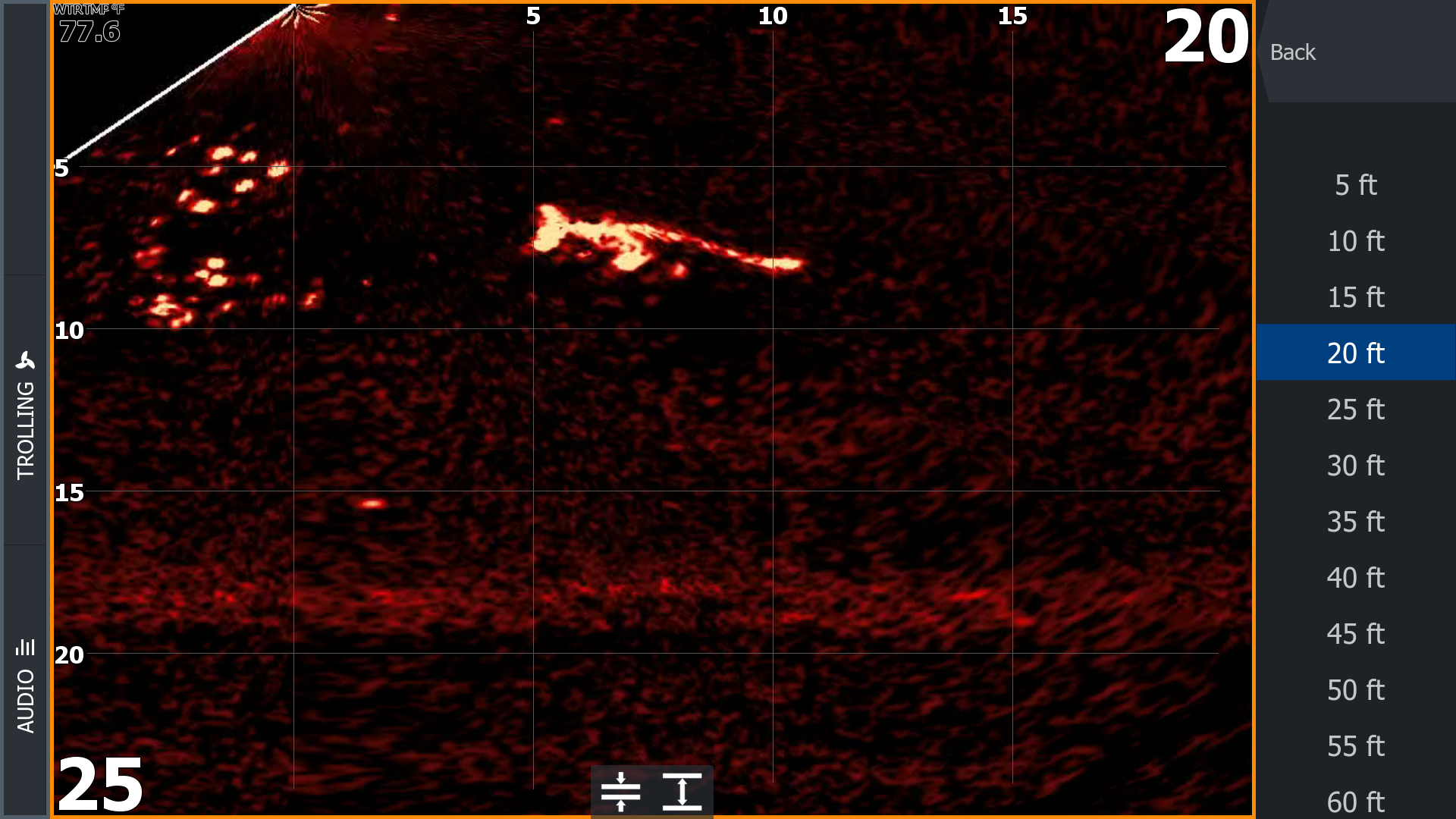
Before modern electronics, most were caught during the spring spawning run (typically March–April, depending on water temps and flow). However, we have been able to target these prehistoric freshwater monsters year round utilizing the latest sonar electronic technology.
How Fishing Guides Target
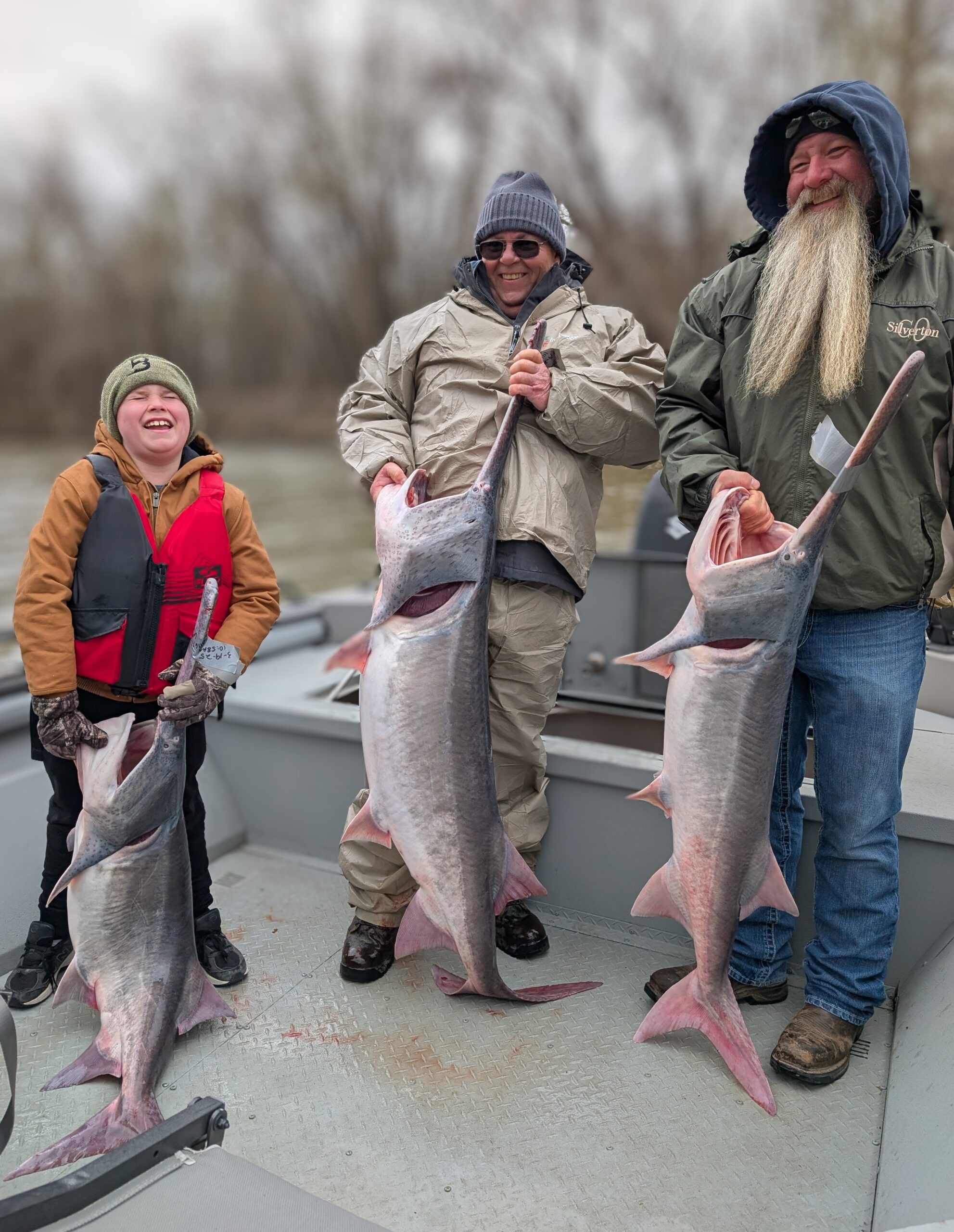
Paddlefish are caught by snagging because they are filter feeders who consume plankton suspended in the water.
Techniques used to target spoonbill include:
- Trolling Dipsy Divers through schools utilizing line counter reels
- Utilizing live sonar technology and precise boat control to flip toward the spoonbill
- Going “old school” and casting/jerking to target fish lined up in fast moving current
- Sight fishing during optimal conditions in areas that only our jetboat can navigate
Why Clients Hire Guides
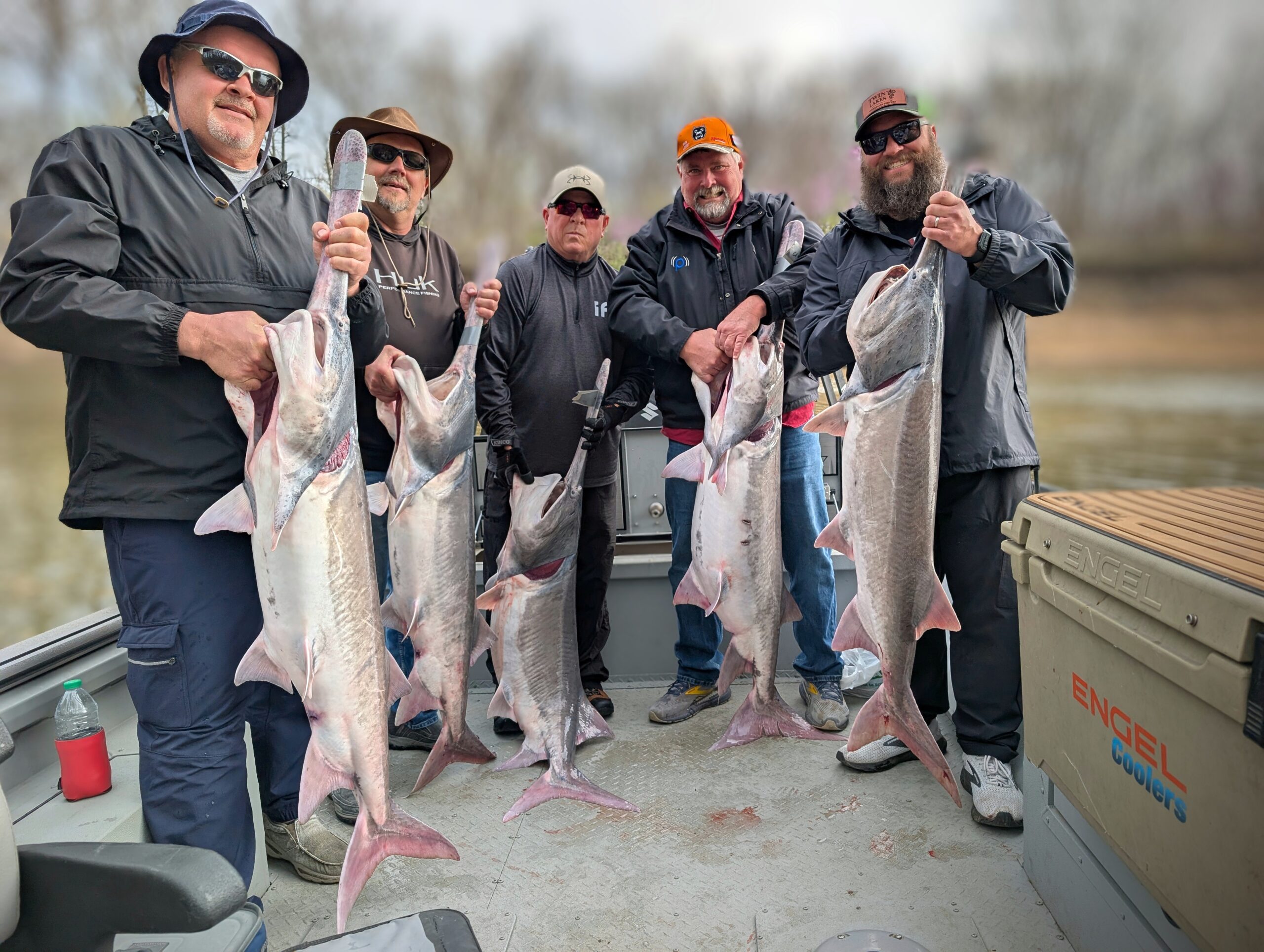
- High success rate
- Trophy potential
- It’s beginner-friendly
- Meat harvesting & caviar interest
- Bucket-list experience
Conservation & Paddlefish Ethics
- Oklahoma operates a tagging program that uses a metal band attached to the lower jaw of the fish. When an angler harvests a banded paddlefish, they can submit the band information and receive detailed history about that individual fish.
- Anglers must report every harvested spoonbill to the Oklahoma Department of Wildlife Conservation. The reporting process is straightforward and similar to the system used for harvested deer.
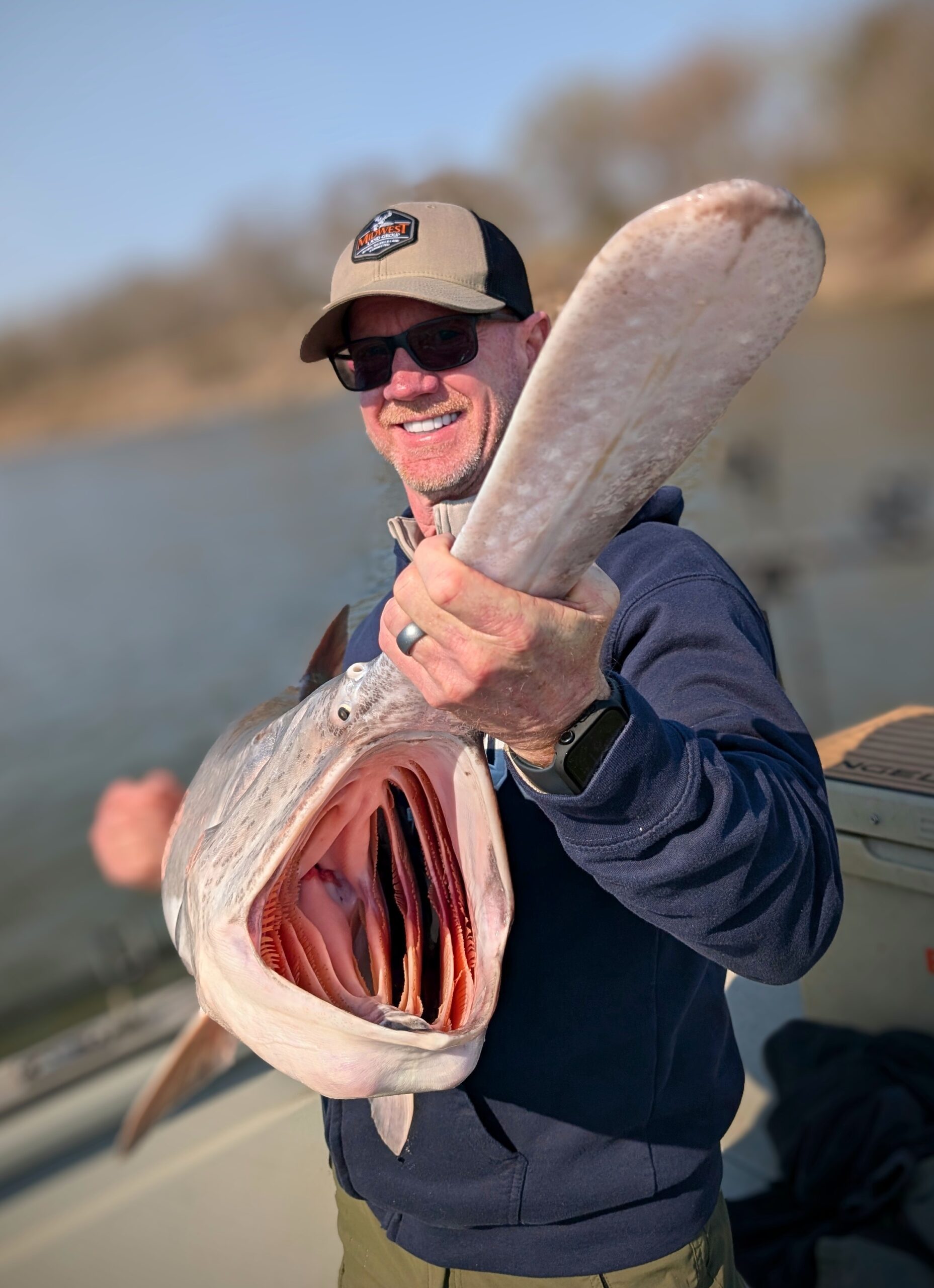
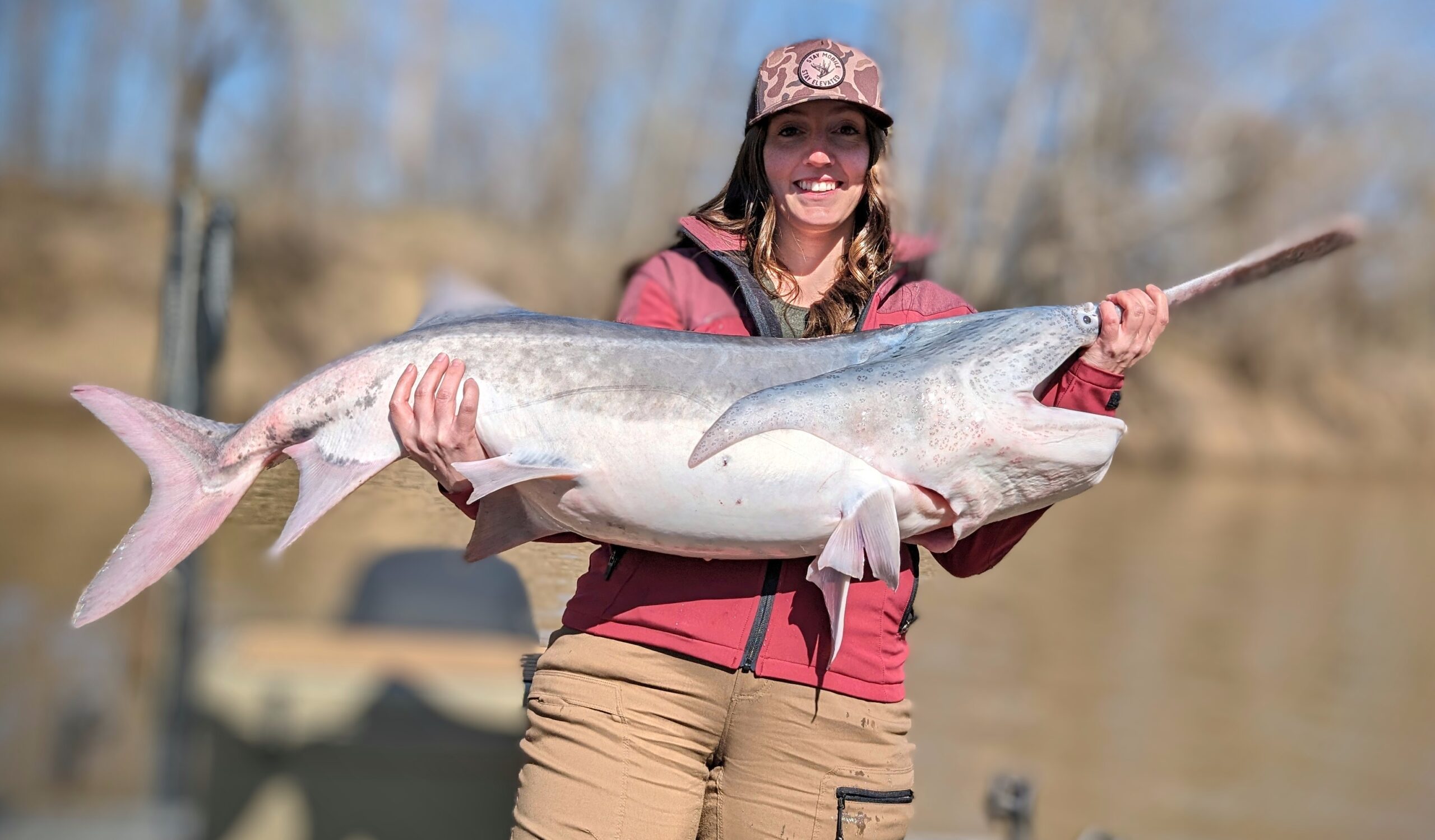
- When practicing catch and release, we prioritize safe handling and quick return to the water. If taking a photograph, we teach proper techniques to hold the spoonbill securely by the bill and support its belly to prevent injury. We do not handle fish by the gills or suspend them by the jaw unless being harvested. The Oklahoma Department of Wildlife Conservation provides Oklahoma fishing guides with handling guidelines and we do our best to follow those standards on every trip.
- Males typically yield firmer, higher-quality table fare. When clients choose to harvest fish for meat, we make a deliberate effort to release large, healthy, egg-bearing females back into the water to help sustain strong spawning populations and protect the future of Oklahoma’s paddlefish fisheries.
Questions We Are Often Asked
Is Paddlefish Meat Good to Eat?
Yes — but don’t expect it to cook or taste like other freshwater fish. Paddlefish meat has a dense, hearty texture that feels more like a premium protein than typical flaky fish. Many anglers who choose to harvest their paddlefish are surprised at how versatile and flavorful spoonbill can be when prepared correctly.
How Should I Cook Paddlefish?
Your personal taste should guide your cooking method. In my home, we prefer it smoked because the rich texture takes on the smokey flavor incredibly well. I’ve also grilled it, fried it, and added it to a seafood boil. Paddlefish cooks quickly, so watch it closely. Overcooking will make it tough and dry. Keep the heat controlled, cook it just until done, and let the natural flavor stand out.
How Do You Decide Which Technique to Use When Targeting Paddlefish?
I base every trip on real-time conditions. Fish location, angler preference, weather, skill level, water flow, fish behavior, water depth, and structure all shape how I target spoonbill. Successful paddlefish fishing in Oklahoma requires strategy and adjustments throughout the day. I read the river, study sonar, and and then decide which method will be best. Paddlefish fishing combines the patience of hunting with the intensity of fishing.
Is It Fun and Do They Fight?
You won’t fully understand the power of a trophy paddlefish until you feel it yourself. When a big spoonbill hooks up, the rod loads deep and the fight begins. These prehistoric giants test your strength, your balance, and your endurance. One battle with a large paddlefish and you’ll know exactly why anglers travel here every year.
Call or text today, 918-607-7357 or Click Book Now to book your Oklahoma paddlefish fishing guide and lock in your preferred dates.
Experience the power, size, and excitement of Oklahoma’s prehistoric giants — and make this season one to remember.